


An invited expert visit to Malta filled with AI, innovation, laughter and unforgettable energy
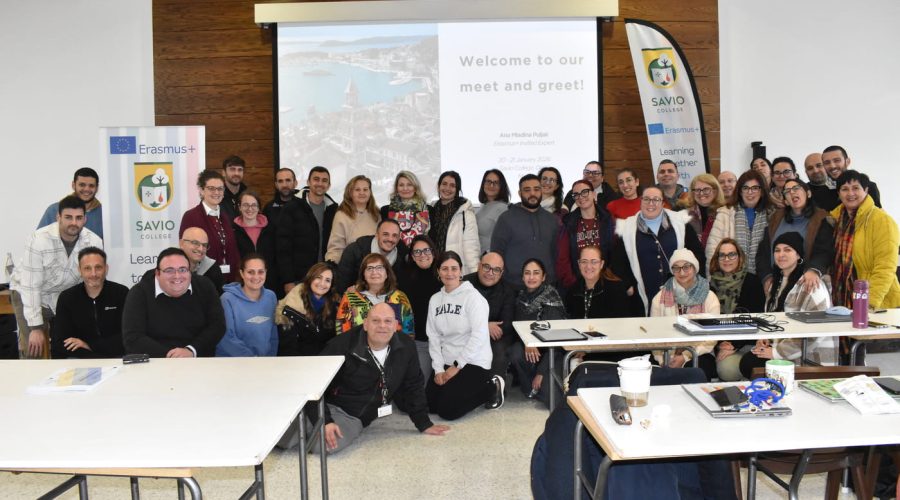
Although Malta was hit by a powerful storm during those days, the experience was unforgettable for all the right reasons. Outside, the weather was dramatic. Inside the classroom, almost 50 teachers became students again, exploring generative AI, Large Language Models, digital tools, creativity, communication, collaboration and critical thinking.
This invited expert visit was more than a training session. It was a week of learning, laughter, warm hospitality, professional curiosity and the kind of human connection that makes Erasmus+ experiences so meaningful.
Key takeaways
- Platform21’s Ana Mladina Puljak visited Savio College in Malta as an invited expert from 19th to 22nd January 2026.
- The training focused on AI in education, innovative teaching methods and drama-based activities.
- Almost 50 teachers explored how AI tools can support lesson planning, assessment, grading, presentations and classroom practice.
- Teachers also experienced practical activities for developing students’ soft skills: communication, creativity, collaboration and critical thinking.
- Savio College welcomed the training with openness, warmth and genuine curiosity.
- Even during one of Malta’s strongest storms of the season, the atmosphere inside the training room was full of laughter, questions, energy and new ideas.
- The visit also became a beautiful cultural experience, with time to discover Dingli, Rabat, Valletta and Malta’s rich history.
How did my invited expert visit to Savio College begin?
“I’ll be there in two minutes” – I told Ian, Savio College cordinator, waiting to pick me up.
“No hurry, take your time” – said Ian politely. Little did he know that these are the words you should never say to a woman getting ready. 15 minutes later I was ready to start my first day at Savio College in Dingli.
And that small, funny moment says a lot about the whole visit.
From the very beginning, Ian Scicluna, the coordinator of Savio College, took care of every single detail. He was helpful, kind, patient and incredibly supportive from the first message to the final day of my stay.
When you travel as an invited expert, especially to another country, these details matter more than people sometimes realise. A warm welcome, clear communication, practical help and genuine kindness make the whole experience easier, calmer and more meaningful.
Thanks to Ian, my visit to Savio College started not with stress, but with a smile.
And that smile stayed with me throughout the entire visit.
What makes Savio College in Malta special?
Savio College in Dingli is the kind of school where you can feel the atmosphere as soon as you arrive.
It radiates years of teaching excellence, tradition and care. At the same time, it is clearly a school ready to welcome innovation, explore new methods and greet digital transformation with open arms.
Savio College is a Catholic Salesian school with a strong focus on holistic education, professional guidance, respect, cheerfulness and family spirit. These values are not just written in school descriptions. They can be felt in the way people welcome you, speak to each other and create the atmosphere of the school.
The school is led by warm, kind and welcoming Father Jake. When you meet the leadership, it becomes clear why the atmosphere of the school feels so wonderful.
There is a certain kind of school culture that cannot be created by posters, policies or slogans alone.
It comes from people.
It comes from leadership.
It comes from relationships.
It comes from the way staff members speak to each other.
It comes from the way a visitor is welcomed.
It comes from the feeling that learning is not only about knowledge, but also about heart.
That is exactly what I felt at Savio College.
Why was Platform21 invited to Savio College?
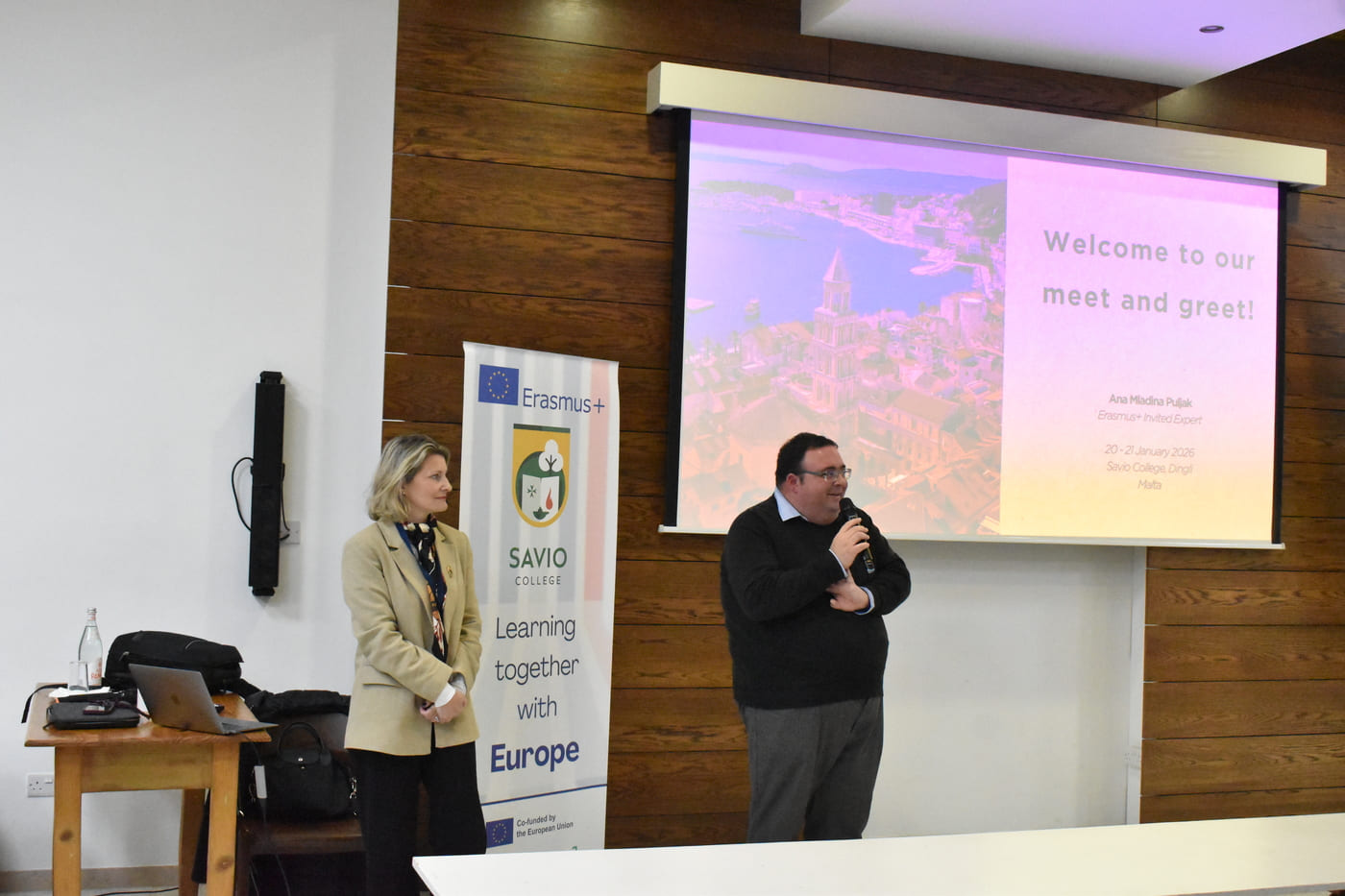
Platform21 was invited to Savio College to share knowledge and practical ideas about artificial intelligence in education and innovative teaching methods.
The goal was not to give a lecture about technology.
The goal was to help teachers explore how modern tools and creative methodology can support their everyday work in the classroom.
During the training, we focused on two important areas of modern education:
- how artificial intelligence can facilitate teachers’ work
- how innovative and drama-based methods can make learning more active, meaningful and engaging
These topics are deeply connected.
AI can help teachers save time, prepare materials, plan lessons, support assessment and explore new possibilities. But innovation in education is not only about digital tools. It is also about how students learn, think, collaborate, communicate and create.
That is why the visit combined AI in education with practical methodology.
Because the future of teaching is not only technological.
It is also human.
What happened when almost 50 teachers became students again?
During the training, almost 50 teachers were transformed into students.
And that is always one of my favourite parts of teacher training.
The room quickly filled with laughter, questions, debates, curiosity and new ideas. Teachers discussed, tried, explored and reacted honestly. They were not passive listeners. They were active participants.
This matters because teachers understand new methods best when they experience them.
If we want students to be active, teachers need to feel what active learning looks like.
If we want students to collaborate, teachers need to collaborate.
If we want students to think critically, teachers need space to question and discuss.
If we want students to create, teachers need to create too.
The atmosphere at Savio College was lively from the very beginning.
Teachers were open, curious and willing to participate. They asked questions, shared opinions and explored tools and methods with the kind of energy that makes a training room come alive.
Outside, the weather was becoming more and more dramatic.
Inside, the storm was made of ideas.
How did we explore AI in education?
We explored AI in education through practical examples, discussion and tools that can support teachers in their everyday work.
Artificial intelligence is already changing how students search, write, create, translate, summarise and learn. Teachers do not need to know everything about AI, but they do need to understand enough to guide their students wisely.
During the training, we discussed:
- generative AI tools
- LLMs, or Large Language Models
- AI tools that can facilitate teachers’ work
- lesson planning with AI
- assessment and grading support
- creating presentations
- generating classroom materials
- responsible use of AI
- the role of the teacher in an AI-supported classroom
One of the most important messages was simple:
AI should not replace teachers.
AI should support teachers.
A good teacher brings context, empathy, ethical thinking, classroom understanding, creativity and professional judgment. AI can help with tasks, ideas and preparation, but it cannot replace the human relationship at the centre of education.
That is why teachers need to understand AI not because it is fashionable, but because their students are already using it.
If educators do not guide students through this new reality, students will still move through it, just without enough guidance.
Why did we focus on drama-based activities and soft skills?
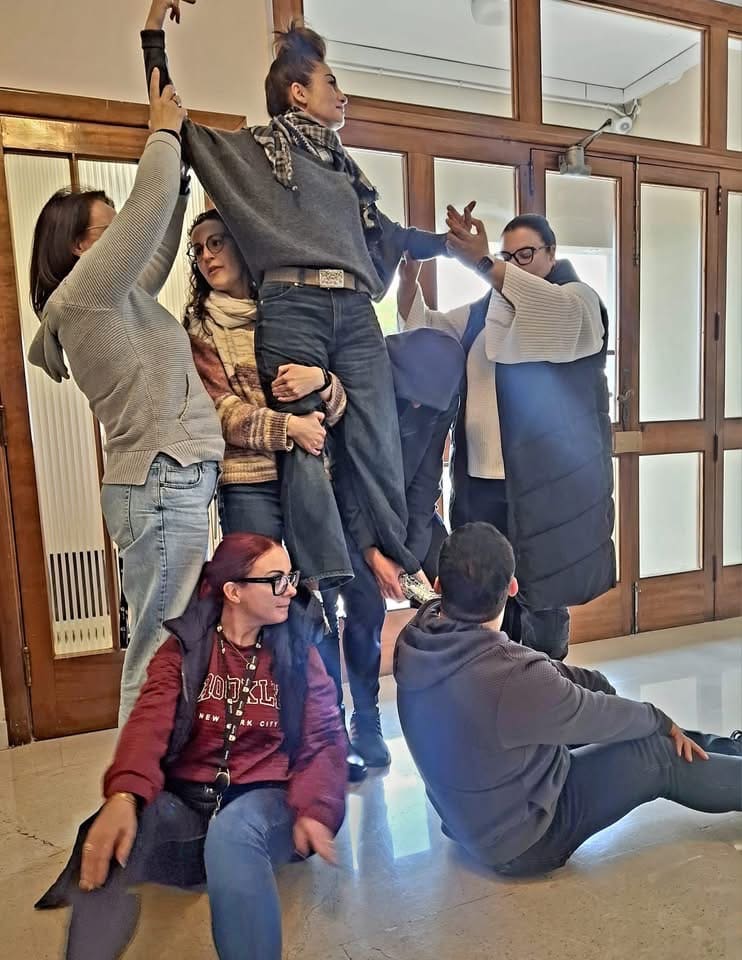
We focused on drama-based activities because they help teachers move from passive learning to active, meaningful and practical application.
In traditional lessons, students often sit, listen and practise without always understanding how the content connects to real life.
Drama-based activities change that.
They invite students to move, speak, react, imagine, collaborate, solve problems and step into different perspectives. They help students use what they have learned in a creative and engaging way.
During the training, we explored how drama-based methods can support the development of the 4Cs:
- communication
- creativity
- collaboration
- critical thinking
These soft skills are not “extra” skills.
They are among the greatest assets students can develop in life.
Students need knowledge, but they also need to express ideas clearly, work with others, listen, adapt, think critically, solve problems and understand different perspectives.
Drama-based activities help make these skills visible and practical.
They turn learning into experience.
And when learning becomes experience, students remember it better.
What made the atmosphere so memorable despite the storm?
The contrast between the weather outside and the atmosphere inside made the experience unforgettable.
During my stay, Malta was hit by a powerful storm. The weather was dramatic, unpredictable and intense. It felt as if the island itself was reminding us that not everything can be planned or controlled.
But inside the training room, the energy was completely different.
There was warmth. There was laughter. There was curiosity. There were questions.
There were debates. There were moments when teachers discovered something new and immediately started thinking about how to use it with their students.
Though the weather outside was turning into what felt like the storm of the century, the classroom was taken over by the most positive energy.
That is what I will remember most.
Not only the content, the tools, or activities.
But the feeling.
The feeling that even in the middle of a storm, people can gather, learn, laugh and create something meaningful together.
What did Malta teach me beyond the training room?
Thanks to Ian, I also got a list of sights I should not miss.
And I am so grateful for that.
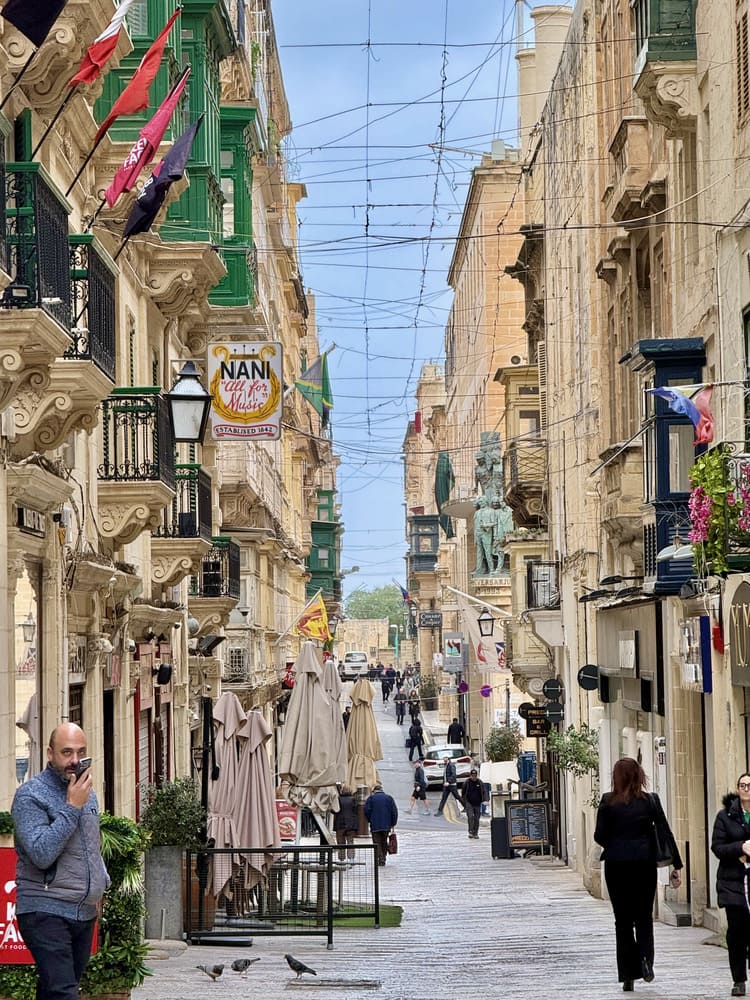
Malta is a place where history speaks from every corner. Even a short walk can feel like moving through layers of time, culture, architecture and stories.
One of the first details that captured my attention was something simple, colourful and completely charming: the doors.
Malta’s colourful house doors are impossible not to notice. Blue, green, red, yellow, deep wooden tones, polished knockers, balconies above them, limestone around them, so each door feels like a small invitation into someone’s story. In a place with so much history, even the doors seem to have personality.
During my stay, I had the chance to experience Dingli, the beautiful Dingli Cliffs, Rabat and Valletta.
And Valletta was magical.
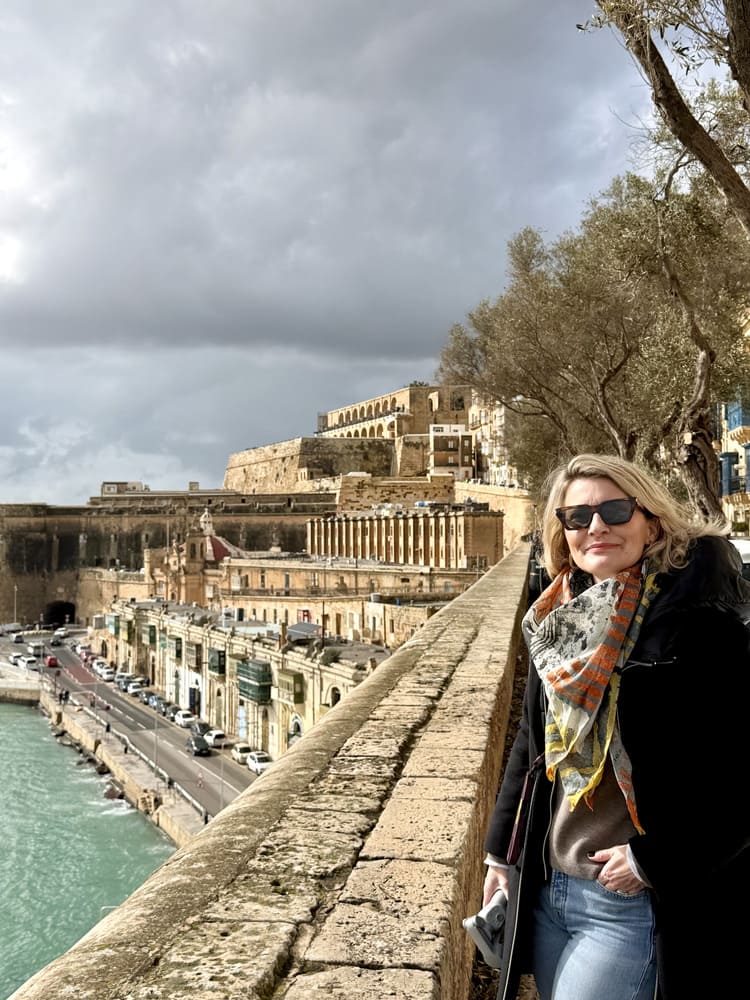
The city has been inscribed on the UNESCO World Heritage List since 1980, and it is easy to understand why. Valletta is not only beautiful; it feels complete. Its streets, churches, palaces, fortifications and limestone buildings all speak the same proud language of history.
January may not be the best time to visit Malta if you are hoping for warm sunshine and calm sea views. But even in windy winter days, Malta’s charm is still there. Maybe it is different. Moodier. Maybe the colours feel even stronger against the grey sky. But the island does not lose its beauty.
Its connection to the Church is not just a detail. It feels like part of the foundation. Churches, chapels, religious art and the legacy of faith are woven into the landscape, the architecture and the atmosphere of the island.
Malta’s more recent story is also deeply tied to the United Kingdom. Malta was a British Crown Colony until 1964, when it gained independence and joined the Commonwealth.
And here is my favourite detail.
Princess Elizabeth lived in Malta with Prince Philip from 1949 to 1951, while he was serving as an officer in the Royal Navy. Malta is the only place outside the UK she ever called “home”.
What makes Valletta so unforgettable?
Valletta is unforgettable because it feels like a city built from history, ceremony, faith and light.
One of the places that stayed with me most was the Grand Master’s Palace.
The Grand Master’s Palace has reopened to the public after a major restoration project.
And it truly feels like a time capsule.
You walk through rooms that were built to project power: armour, ceremony, status, hierarchy and history. The legacy of the Knights of St John is everywhere, often framed through the idea of defending the gates of Europe.
The rooms do not feel neutral. They were designed to impress. They were designed to remind you who held power, who entered, who watched, who ruled and who defended.
Another place that completely amazed me was St John’s Co-Cathedral.
St John’s Co-Cathedral is absolutely stunning. With its carved and gilded limestone walls, rich decoration and Caravaggio’s paintings, it is a true masterpiece. A separate room highlights Caravaggio’s connection with Malta and the Order of St John, including his arrival in Malta in 1607 and his acceptance into the Order in 1608.
When you enter, you are given a QR code that takes you directly to a website explaining every corner of the church.
And every corner has a story to tell. One of them even mentioned Roman emperor Diocletian – whose palace later became the heart of my own hometown – Split.
I spent about an hour and a half there, and it flew by in a second.
That is always a sign that a place has captured you completely. You stop checking the time. You simply move from one story to another, from one detail to another, from one piece of art to the next.
Valletta’s lively streets added another layer to the experience. Even during a stormy January visit, the city had colour, movement and spirit.
On my last morning before going home, the sun appeared again.
And Valletta showed its colourful spirit once more, almost as if it wanted to whisper that I should come back in spring, when the island is ready to show its beauty to the fullest.
I think I will have to listen.
What are some things to see in Malta during their visit?
During your visit to Malta, one should explore Valletta, Dingli Cliffs, Rabat, St John’s Co-Cathedral, the Grand Master’s Palace and Malta’s colourful streets, doors, churches and historic architecture.
Is January a good time to visit Malta?
January may be windy and unpredictable in Malta, but the island still has a strong charm in winter. Valletta, Rabat, Dingli Cliffs and Malta’s historic sites remain beautiful even on stormy days.

Why are invited expert visits so powerful for teachers?
Invited expert visits are powerful because they bring fresh ideas directly into a school’s own environment.
Instead of teachers travelling abroad for training, the expert comes to them. This allows a larger group of staff members to participate, ask questions, discuss shared challenges and explore new methods together.
An invited expert visit can help schools:
- introduce new teaching methods
- explore AI and digital transformation
- support staff development
- build a shared professional language
- create space for discussion
- strengthen collaboration among teachers
- connect international expertise with local school needs
At Savio College, this was exactly what happened.
Teachers came together not only to learn about AI and innovative methods, but to experience them, question them and imagine how they could be used in their own classrooms.
For me, this is the real value of invited expert work.
It is not about arriving as someone who has all the answers.
It is about creating a space where educators can explore the right questions together.
FAQ: Invited expert visit to Malta, AI in education and innovative teaching
What was the purpose of the invited expert visit to Savio College in Malta?
The purpose of the invited expert visit was to provide teacher training on artificial intelligence in education, innovative teaching methods and drama-based activities that support soft skills development.
When did the invited expert visit take place?
The invited expert visit to Savio College in Dingli, Malta, took place from 19th to 22nd January 2026.
Who organised the visit at Savio College?
The visit was coordinated by Ian Scicluna and Elaine Scorey from Savio College, who supported the process from beginning to end and took care of every detail during the stay.
What topics were covered during the teacher training?
The training covered generative AI tools, Large Language Models, AI for lesson planning, assessment, grading, presentations, innovative teaching methods, drama-based activities and soft skills development.
Why is AI important for teachers?
AI is important for teachers because students are already using it to search, write, create and learn. Teachers need to understand AI so they can guide students responsibly and use the tools in meaningful, ethical and practical ways.
What are drama-based activities in education?
Drama-based activities are teaching methods that use role-play, movement, imagination, storytelling and practical scenarios to help students actively apply knowledge and develop communication, creativity, collaboration and critical thinking.
Why are soft skills important in education?
Soft skills are important because students need communication, collaboration, creativity, critical thinking, empathy and problem-solving skills to succeed in school, work and life.
What made this invited expert visit memorable?
The visit was memorable because of the warm welcome from Savio College, the positive energy of almost 50 teachers, the lively training atmosphere, the powerful storm outside and the unforgettable experience of discovering Malta.
Final reflection: A storm outside, inspiration inside
My invited expert visit to Savio College in Malta was one of those experiences that remind me why I love what I do.
I came to share knowledge about AI in education, innovative teaching and soft skills.
But I left with much more than that.
I left with memories of kind people, curious teachers, a warm school atmosphere, laughter in the training room, dramatic weather outside, beautiful Maltese history and the feeling that education is still one of the most human professions in the world.
Thank you to Ian Scicluna and Elaine Scorey for taking care of every detail with such kindness and professionalism.
Thank you to Father Jake Mamo and Savio College for the warm welcome.
And thank you to the teachers who turned a stormy week in Malta into a bright, lively and unforgettable learning experience.
Sometimes, the weather outside becomes the perfect metaphor.
Because while hurricane Harry was moving across Malta, inside Savio College, ideas were moving too.
And that is the kind of storm every teacher training room should have.

Content
- How did my invited expert visit to Savio College begin?
- What makes Savio College in Malta special?
- Why was Platform21 invited to Savio College?
- What happened when almost 50 teachers became students again?
- How did we explore AI in education?
- Why did we focus on drama-based activities and soft skills?
- What made the atmosphere so memorable despite the storm?
- What did Malta teach me beyond the training room?
- What makes Valletta so unforgettable?
- Why are invited expert visits so powerful for teachers?
- FAQ: Invited expert visit to Malta, AI in education and innovative teaching
- Final reflection: A storm outside, inspiration inside
Tags
You may also like:
Erasmus+ Invited Expert in Talsi, Latvia: Innovative Teaching (10–12 Nov 2025)

Best free AI tools for teachers 2026: Free teachers' toolbox
The 2026 Erasmus+ Roadmap: 5 Key Priorities for KA1 Application
Erasmus+ 2026 Programme Guide: Key Changes, KA1 & KA2 Deadlines
How to write a successful Erasmus+ project proposal (KA121/KA122)
Inside Iceland’s Education System: Trust, Nature, Clarity

Erasmus+ Programme 2028 – 2034 proposal: What to expect
A teacher training course in Iceland: A week to remember in Reykjavik
Erasmus+ Teacher Training Mobility with Platform21- Top 5 Reasons Why Croatia Is a Hidden Gem

Erasmus+ Invited Expert: Cappadocia, AI, and the warmest of welcomes