


Description
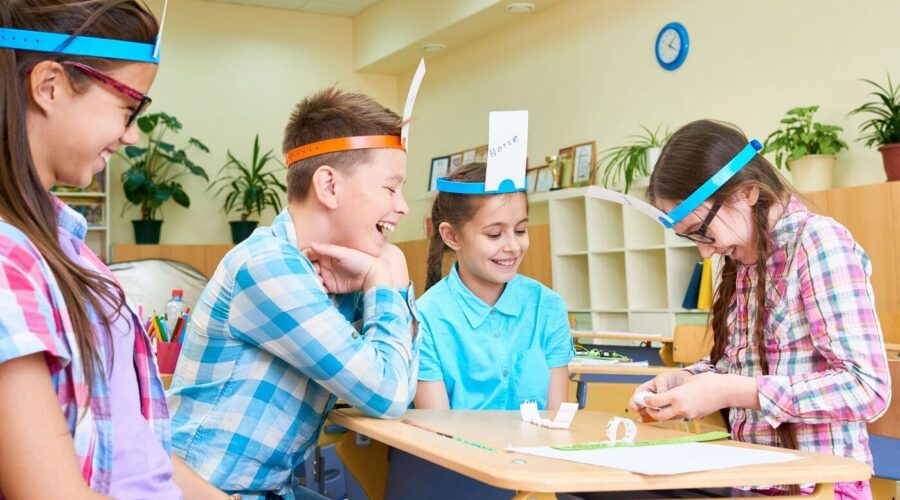
Children have always learned through play, movement, exploration, and interaction with others. Games capture students’ attention, invite them to participate, and turn challenges into exciting learning opportunities. When games are connected to clear educational goals, they can transform the classroom into a dynamic learning environment in which students are motivated to think, communicate, collaborate, and create.
This course is designed for teachers who wish to bring more fun, movement, and active participation into their classrooms. Participants will explore the difference between game-based learning and gamification and discover how points, challenges, missions, levels, storytelling, and rewards can be used to improve students’ motivation and engagement.
Movement can help students become more alert, focused, and ready to learn. It can support memory, creativity, problem-solving, and collaboration. The course will introduce fun and practical ways of connecting movement with learning through educational games, learning stations, role-play, drama-based activities, scavenger hunts, simulations, and outdoor challenges. We will also be exploring AI tools that make the creating process easier and faster for teachers.
Participants will also explore project-based learning and learn how to connect individual games and activities into a meaningful project. Students can start with an exciting challenge, work together through a series of missions, investigate a real-life problem, and create a final product or solution. In this way, games do not serve only as short classroom activities but become part of a complete learning journey.
The course will guide participants through the process of planning, creating, testing, and evaluating their own games and projects. Special attention will be given to collaborative learning, student-centred teaching, formative assessment, and adapting activities to different ages, subjects, abilities, and learning needs. We will be connecting physical activity and attention, the value of physically enacting concepts, and the contribution of social interaction to active learning.
By the end of the course, participants will have created a game-based and project-based learning experience ready to use in their classrooms. If you wish to get your students moving, thinking, laughing, creating, and learning together, this is the course to take.
Learning outcomes
The course will help the participants to:
- understand the difference between game-based learning, gamification, playful learning, and project-based learning
- explore the benefits of games and movement for students’ attention, motivation, creativity, and memory
- use movement and gesture to create an active and engaging learning environment
- integrate learning stations, role-play, simulations, scavenger hunts, and outdoor activities into regular lessons
- use game elements such as challenges, missions, levels, points, progress, feedback, and rewards
- connect games and gamified activities with clear educational goals
- explore project-based learning and learn how to structure projects around real-life problems and challenges
- develop students’ communication, collaboration, critical thinking, creativity, and problem-solving skills
- encourage student voice, choice, responsibility, and independent learning
- use games, quizzes, and challenges as effective formative assessment tools
- balance competition and cooperation and create a positive classroom atmosphere
- adapt games and movement activities to different ages, subjects, abilities, and educational contexts
- explore digital and AI tools for creating interactive and collaborative learning experiences
- plan, create, test, and evaluate a complete game-based and project-based learning experience
Tentative schedule
Day 1 – Introduction to the course
- Welcome event; presenting participants, their schools, cities, and countries
- Presenting the host organization and the city
- Getting to know each other: icebreakers and team games
- Introduction to the course and the schedule
- Why we play: games as powerful learning experiences
- Experiencing a short game-based activity from the students’ perspective
Day 2 – Learning through games
- Game-based learning, gamification, and playful learning
- Connecting games with learning goals
- Games that develop communication, creativity, critical thinking, and collaboration
- Creating a positive classroom atmosphere through play
- Workshop: adapting a familiar game to a school subject
- Guided walking tour
Day 3 – Active learning and learning in motion
- The importance of active participation in the learning process
- How movement can support attention, memory, and creativity
- Learning through gesture, physical action, and role-play
- Learning stations and active classroom challenges
- Moving breaks versus learning through movement
- Workshop: transforming a traditional lesson into an active-learning experience
Day 4 – Gamification: turn learning into an adventure
- Game elements: missions, levels, points, badges, feedback, and progress
- Creating a story and purpose behind a learning challenge
- Balancing cooperation and competition
- Designing inclusive challenges for mixed-ability classrooms
- Digital tools for quizzes, games, and interactive challenges
- Workshop: gamifying an existing lesson
Day 5 – From games to project-based learning
- Introduction to project-based learning
- Student-centred learning and active work on real-life projects
- Creating an interesting driving question
- Developing leadership, teamwork, time management, and creativity
- Using games as project entry events and formative assessment activities
- Workshop: creating a game-based project plan
Day 6 – Games and projects beyond the classroom
- Outdoor education and experiential learning
- Scavenger hunts and location-based learning
- Using nature, public spaces, and cultural heritage as learning environments
- Team missions involving observation, movement, problem-solving, and creativity
- Peer feedback and project improvement
Day 7 – Course closure and evaluation
- Reflecting on the course and what we have learned during the week
- Presentation of participants’ final game-based and project-based learning experiences
- Sharing classroom implementation ideas
- Creating a personal action plan
- Course evaluation
- Erasmus+ Certificate award ceremony
Available Dates
| Location | Date |
|---|---|
| Split |
1791072000
4 Oct 2026 |
| Split |
1792281600
18 Oct 2026 |
| Split |
1793491200
1 Nov 2026 |
| Split |
1794700800
15 Nov 2026 |
| Split |
1795910400
29 Nov 2026 |
| Split |
1797120000
13 Dec 2026 |
| Split |
1799539200
10 Jan 2027 |
| Split |
1800748800
24 Jan 2027 |
| Split |
1801958400
7 Feb 2027 |
| Split |
1803168000
21 Feb 2027 |
| Split |
1804377600
7 Mar 2027 |
| Split |
1805587200
21 Mar 2027 |
| Split |
1806796800
4 Apr 2027 |
| Split |
1808006400
18 Apr 2027 |
| Split |
1809216000
2 May 2027 |
| Split |
1810425600
16 May 2027 |
| Split |
1811635200
30 May 2027 |
| Split |
1812844800
13 Jun 2027 |
| Split |
1814054400
27 Jun 2027 |
| Split |
1815955200
19 Jul 2027 |
| Split |
1816473600
25 Jul 2027 |
| Split |
1818374400
16 Aug 2027 |
| Split |
1818892800
22 Aug 2027 |
| Split |
1820102400
5 Sep 2027 |
| Split |
1821312000
19 Sep 2027 |
| Split |
1822521600
3 Oct 2027 |
| Split |
1823731200
17 Oct 2027 |
| Split |
1824940800
31 Oct 2027 |
| Split |
1826150400
14 Nov 2027 |
| Split |
1827360000
28 Nov 2027 |
| Split |
1828569600
12 Dec 2027 |
Specifics

Request Info
"*" indicates required fields