


How Can UK Teachers Find the Right Erasmus+ Structured Course for 2027?

UK teachers can find the right Erasmus+ structured course by matching their school’s development needs with a practical training programme, qualified trainers, clear learning outcomes and transparent conditions. The UK is returning to Erasmus+ from 2027, with funding applications made through eligible organisations rather than individual teachers. Researching courses now can help schools prepare, but participation depends on an approved project and the applicable funding rules.
Perhaps you want to use AI more confidently, make lessons more inclusive or help students communicate and collaborate. Perhaps your school needs a fresh approach to staff wellbeing.
An international course can give you time to explore those challenges with teachers who understand them. The question is how to choose training that leads to something useful when you return.
Here is what UK teachers, school leaders and Erasmus+ coordinators should consider.
Can UK teachers participate in Erasmus+ again?
Yes. The UK’s association to Erasmus+ from 2027 opens opportunities for UK organisations to participate in projects funded under the 2027 call.
The European Commission explains that individual opportunities depend on successful projects becoming operational, with participation available in the second half of 2027 at the earliest. A course advertised for 2027 is therefore not automatically available through a funded UK project.
Use the preparation period to identify your school’s priorities, discuss staff development and compare suitable providers.
Who applies for Erasmus+ funding: the teacher or the school?
Your school or another eligible organisation applies for Erasmus+ funding. Individual teachers cannot apply directly for a personal training grant.
Start by speaking to your headteacher, professional development lead or international coordinator. Find out who will coordinate the application and how staff opportunities will be communicated.
UK guidance identifies schools, academy trusts, local authorities and other eligible education organisations as possible applicants. The relevant route depends on the organisation and education sector.
You can still take the initiative: bring leadership a clear training need, a suitable course and a realistic proposal for sharing what you learn.
What is an Erasmus+ structured course?
A structured course is organised professional training with a defined programme, learning outcomes and qualified professionals delivering it.
It should explain what participants will learn, how they will learn it and how that learning relates to their work.
Under the currently published school education rules, courses and training last 2–10 days. They must include interaction and a transnational learning element; entirely passive lecture attendance is not supported. Schools planning UK participation should check these conditions against the applicable 2027 Guide.
For teachers, this means looking beyond an attractive title. What will you actually do during the week?
Will you design materials, practise techniques, test ideas and receive feedback? Will you leave with something you can adapt for your pupils?
Which course topic should your school choose?
Choose the topic that addresses an identified need and offers a realistic way to improve practice.
For example:
| Your school’s need | A relevant training focus | A practical outcome to look for |
| Teachers spend too long preparing resources | AI-supported planning and assessment | A reviewed lesson sequence, differentiated materials and an assessment rubric |
| Pupils need more accessible learning activities | Inclusive teaching and differentiation | Adaptations for a range of learner needs |
| Lessons need more active participation | Experiential and movement-based learning | Activities teachers have practised and can adapt |
| Pupils struggle to work together | Communication, collaboration and critical thinking | Tasks that develop subject knowledge alongside soft skills |
| Staff need healthier working practices | Wellbeing, resilience and self-awareness | A realistic personal and school action plan |
| Leaders want stronger relationships | Communication and educational leadership | Approaches to feedback, listening and difficult conversations |
A useful starting sentence is:
“Our school needs to improve ___, so participants will learn ___ and apply it through ___.”
If you can complete that sentence clearly, you have a stronger basis for comparing courses.
How do you recognise a high-quality Erasmus+ course provider?
Look for evidence of good teaching, clear communication and reliable support.
The European Commission’s course quality standards provide a useful checklist. Before registering, ask for:
- A detailed programme, learning outcomes and teaching methods.
- Information about the trainers’ qualifications and relevant experience.
- The intended audience, teaching language and expected group composition.
- Clear fees, inclusions, cancellation conditions and confirmation arrangements.
- Suitable, accessible learning spaces.
- Practical activities, feedback and opportunities to exchange approaches.
- Certification and support for applying the learning afterwards.
The standards also specify an average of at least five hours of learning activities per physical course day, calculated across the working days. Check how the advertised timetable delivers this.
Reviews can add context, especially when former participants describe the training itself. Look for specific comments about the trainer, organisation, activities and classroom relevance.
Are Erasmus+ course providers officially approved by the EU?
Course providers operate independently. A course listing does not mean the European Commission has approved or quality-assured the provider.
The European School Education Platform explicitly explains that listed courses have not been validated or pre-checked. Selecting a suitable provider remains the responsibility of the school or consortium.
Treat an organisation’s registration details as identification information. Then investigate the actual programme, trainers and terms. Erasmus+ Courses Platform21 is officialy certified by Croatian National Agency AMPEU.
What can Erasmus+ funding cover?
Depending on the approved project and applicable rules, funding can support course fees, travel and living costs, alongside other eligible support.
Additional support can also be available for participants facing particular barriers. Funding is managed through the participating organisation.
Before committing, ask your coordinator:
- Which costs will our project support?
- How will bookings and payments be managed?
- Could any expenses exceed the available grant?
- What happens if the course or our participation is cancelled?
Avoid assuming that “Erasmus+ funded” means every expense will automatically be paid in full.
What are the application deadlines for UK schools?
Check the UK National Agency’s current timetable and the 2027 Programme Guide for your specific funding action.
The published preparation timetable identifies November 2026 for the funding call opening, February/March 2027 for deadlines and June–August 2027 for funding outcomes. These are planning milestones; your action’s published deadline is the one to follow.
Do not assume that an accreditation deadline advertised for another country or call applies to a UK school.
Do schools need Erasmus accreditation to get started?
The programme includes short-term mobility projects as well as an accredited route. Check which options are available to your organisation under the relevant UK call.
Accreditation supports organisations planning ongoing international mobility. A short-term project can offer a more focused starting point. Accreditation itself should not be confused with an awarded mobility budget.
Choose the route around your school’s plans and capacity, rather than assuming that the most extensive application is always the best first step.
Where can UK teachers attend Erasmus+ courses?
Eligible destinations include EU member states and associated countries such as Iceland, Norway and Türkiye. Check the destination and activity against your project’s rules before booking. Erasmus+ Courses Platform21 offers courses in Croatia, Iceland and Italy.
Location matters. Travel connections, accessibility, accommodation and the learning environment all affect the experience.
A course in Split might combine professional development with opportunities to explore a Mediterranean setting. Outdoor learning can be particularly meaningful when participants experience activities themselves and then consider how to adapt them at home. Iceland offers its magical nature while Italy its culture, food and romantic setting.
Ask how the location contributes to learning, and distinguish training sessions from optional sightseeing.
Can you research courses before funding is approved?
Yes. Early research helps you compare programmes and prepare a realistic project.
Erasmus Courses Platform21 is happy to help and provide information and advice on how to prepare a successful KA1 project application. Contact us!
Request a programme, quotation and written booking terms. Check whether an expression of interest creates any financial commitment and when a place becomes binding.
Keep the funding decision, course confirmation and travel booking conditions aligned.
What should you bring back to school?
Plan for a change in practice, alongside the certificate.
Before travelling, agree what you will test afterwards. That might be an inclusive lesson sequence, an approach to assessment or a collaborative classroom activity.
A manageable follow-up could involve trying one approach with a class, collecting pupil feedback and sharing the results with colleagues. This gives your training a purpose beyond the week abroad.
Finding your course with Platform21
At Platform21, we believe teachers should experience the approaches they are learning.
That means trying activities, creating resources, questioning ideas and reflecting on what will work with your learners. Our approach connects AI and digital teaching with the human skills education needs: communication, creativity, collaboration, critical thinking and wellbeing.
If your school is preparing for Erasmus+ participation, contact us with your teaching context, development priorities and preferred dates. We can help you explore a relevant programme and provide information for your planning.
The right structured course gives you more than ideas. It gives you the time, practice and confidence to use them.
Content
- Can UK teachers participate in Erasmus+ again?
- Who applies for Erasmus+ funding: the teacher or the school?
- What is an Erasmus+ structured course?
- Which course topic should your school choose?
- How do you recognise a high-quality Erasmus+ course provider?
- Are Erasmus+ course providers officially approved by the EU?
- What can Erasmus+ funding cover?
- What are the application deadlines for UK schools?
- Do schools need Erasmus accreditation to get started?
- Where can UK teachers attend Erasmus+ courses?
- Can you research courses before funding is approved?
- What should you bring back to school?
- Finding your course with Platform21
Tags
You may also like:
An invited expert visit to Malta filled with AI, innovation, laughter and unforgettable energy
Erasmus+ Invited Expert in Talsi, Latvia: Innovative Teaching (10–12 Nov 2025)

Best free AI tools for teachers 2026: Free teachers' toolbox
The 2026 Erasmus+ Roadmap: 5 Key Priorities for KA1 Application

Erasmus+ 2026 Programme Guide: Key Changes, KA1 & KA2 Deadlines
How to write a successful Erasmus+ project proposal (KA121/KA122)

Inside Iceland’s Education System: Trust, Nature, Clarity

Erasmus+ Programme 2028 – 2034 proposal: What to expect
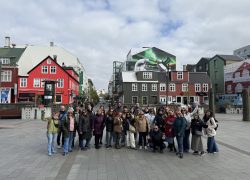
A teacher training course in Iceland: A week to remember in Reykjavik

Erasmus+ Teacher Training Mobility with Platform21- Top 5 Reasons Why Croatia Is a Hidden Gem