


Description
Parks, beaches, forests, gardens, city streets, and cultural heritage sites become inspiring learning environments that encourage students to explore, investigate, move, collaborate, and connect what they learn with the world around them in this dynamic course for teachers.
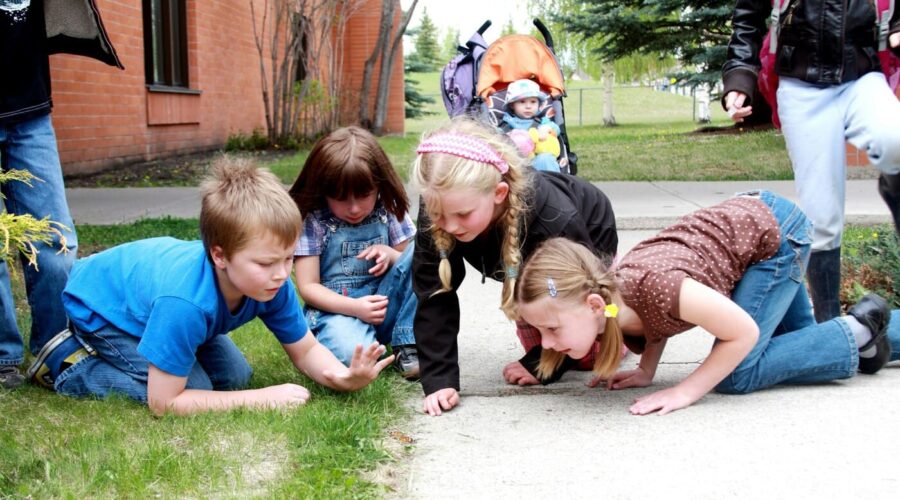
Outdoor education creates opportunities for active and experiential learning. When students observe natural phenomena, collect information, solve practical challenges, and learn through direct experience, they become active participants in the learning process. Learning outdoors can stimulate curiosity and creativity, improve motivation, and help students develop communication, collaboration, critical thinking, and problem-solving skills.
This course is designed for teachers who wish to take learning beyond the traditional classroom and discover how outdoor activities can be connected with different subjects and educational goals. We will use traditional paper-based activities, as well as digital learning apps.
The natural and cultural environment becomes our classroom throughout the course. Participants take part in outdoor games, observation activities, team challenges, creative tasks, and environmental investigations. They will discover how movement, sensory experiences, and interaction with real places can make learning more active and memorable.
A school visit will provide an opportunity to see outdoor education in practice. Participants will visit a school that uses its botanical garden and olive grove as learning environments. The students take part in caring for these spaces, connecting education with responsibility, sustainability, cooperation, and the local community. Participants will exchange examples of good practice with their European colleagues and consider how similar ideas could be adapted to their own schools.
The course will also address the practical aspects of outdoor education, including lesson planning, accessibility, inclusive participation, group management, and preparing alternative activities for changing weather conditions. Participants will learn how to create safe and meaningful outdoor experiences for students with different abilities and learning needs.
By the end of the course, participants will have created a practical outdoor-learning plan that can be transferred to their own educational setting. If you wish to bring more movement, curiosity, nature, and real-life experience into your teaching, this is the course to take.
Learning outcomes
The course will help the participants to:
- understand the principles and educational benefits of outdoor, experiential, and place-based learning
- discover how natural and urban environments can become meaningful learning spaces
- design outdoor lessons connected with clear curriculum objectives
- use movement, observation, exploration, and sensory experiences to support active learning
- use digital apps for outdoor education
- create outdoor games, learning stations, scavenger hunts, and collaborative team challenges
- apply inquiry-based methods through field observation, investigation, data collection, and reflection
- connect outdoor learning with environmental responsibility and care for the local community
- plan safe outdoor activities and conduct basic risk assessments
- manage student groups effectively outside the traditional classroom
- adapt outdoor activities for different ages, subjects, abilities, and learning needs
- create inclusive outdoor experiences in which every student can participate
- create a transferable outdoor-learning plan ready to implement in their own school
Tentative schedule
Day 1 – Introduction to outdoor education
- Welcome event; presenting participants, their schools, cities, and countries
- Presenting the host organization and the course location
- Introduction to the course and the schedule
- Principles and benefits of outdoor, experiential, and place-based learning
- Exploring the local environment as a learning resource
Day 2 – Active learning in parks
- Connecting movement, sensory experiences, and learning
- Observation and exploration activities in a local park
- Learning stations and nature-based challenges
- Inquiry-based learning through questions, discovery, and reflection
- Outdoor games that develop communication, collaboration, and problem-solving
- Adapting park activities to different subjects and age groups
- Guided walking tour
Day 3 – Learning by the sea
- The beach as an outdoor classroom
- Outdoor activities and environmental investigation
- Observing, collecting, comparing, measuring, and documenting
- Creative activities inspired by the sea
- Team challenge: creating a beach-based learning activity
Day 4 – Forest learning and nature-based wellbeing
- Experiential learning in a forest park
- Nature-based activities for attention, creativity, and wellbeing
- Movement, mindfulness, and sensory exploration
- Scavenger hunts and storytelling
- Reflecting on the relationship between nature, wellbeing, and learning
Day 5 – Cultural heritage as a learning environment
- Taking learning into city streets and cultural heritage sites
- Place-based learning through local stories, architecture, and traditions
- Observation, photography, mapping, and creative documentation
- Designing a cultural heritage learning trail
- Connecting local heritage with European values and intercultural learning
Day 6 – School visit and safe outdoor learning
- Visiting a local school that uses outdoor education
- Discovering how students care for shared natural spaces
- Connecting outdoor learning with sustainability, responsibility, and community
- Exchanging good practices with local teachers
Day 7 – Practical application: creating an outdoor classroom
- Participants work in teams to deliver an outdoor-learning activity
- Applying experiential, inquiry-based, and place-based learning methods
- Testing activities with other course participants
- Peer feedback and discussion
- Course reflection and evaluation
- Erasmus+ Certificate award ceremony
Available Dates
| Location | Date |
|---|---|
| Split |
1789948800
21 Sep 2026 |
| Split |
1791072000
4 Oct 2026 |
| Split |
1791158400
5 Oct 2026 |
| Split |
1792281600
18 Oct 2026 |
| Split |
1792368000
19 Oct 2026 |
| Split |
1793491200
1 Nov 2026 |
| Split |
1793577600
2 Nov 2026 |
| Split |
1794700800
15 Nov 2026 |
| Split |
1794787200
16 Nov 2026 |
| Split |
1795910400
29 Nov 2026 |
| Split |
1795996800
30 Nov 2026 |
| Split |
1797120000
13 Dec 2026 |
| Split |
1797206400
14 Dec 2026 |
| Split |
1800748800
24 Jan 2027 |
| Split |
1803168000
21 Feb 2027 |
| Split |
1805587200
21 Mar 2027 |
| Split |
1806796800
4 Apr 2027 |
| Split |
1808006400
18 Apr 2027 |
| Split |
1809216000
2 May 2027 |
| Split |
1810425600
16 May 2027 |
| Split |
1814054400
27 Jun 2027 |
| Split |
1815955200
19 Jul 2027 |
| Split |
1816473600
25 Jul 2027 |
| Split |
1818892800
22 Aug 2027 |
| Split |
1821312000
19 Sep 2027 |
| Split |
1823731200
17 Oct 2027 |
| Split |
1826150400
14 Nov 2027 |
| Split |
1828569600
12 Dec 2027 |
Specifics

Request Info
"*" indicates required fields